1 min read
How AI Is Changing the Way Customers Find Local Businesses
The way people find local businesses has changed significantly over the past few years, and artificial intelligence (AI) is now a central part of...
| Branding | |
| Media Buying | |
| Graphic Design | |
| Copywriting | |
| Public Relations |
4 min read
Team Advanté-BCS
:
July 21, 2026
Most business owners assume their website works well for everyone who visits it, but the reality is that a significant number of websites fail basic accessibility checks. Website accessibility refers to how easily people with disabilities can use, navigate, and understand a site. When a website is not accessible, it creates barriers for users and can also hurt search performance, legal standing, and overall credibility.
The problem is rarely intentional, but many accessibility failures stem from common oversights during design and development that no one catches until an audit or a complaint surfaces. Fixing these issues does not require rebuilding a website from scratch. In most cases, the changes are straightforward once you know where to look.
Website accessibility is the practice of designing and building websites so that people with visual, auditory, motor, or cognitive disabilities can interact with them effectively. The Web Content Accessibility Guidelines (WCAG), maintained by the World Wide Web Consortium (W3C), are the most widely accepted standard. Most compliance efforts reference WCAG 2.1 or 2.2 at the AA level, which covers the majority of common barriers.
Accessibility affects people who navigate with a keyboard, users who rely on captions, individuals with color vision deficiency, and anyone using assistive technology. It also affects older adults, people with temporary injuries, and users on slow connections or small screens, which is closely tied to responsive web design. The broader the audience your website can serve, the stronger your reach becomes.
When websites are run through accessibility testing tools such as WAVE, Lighthouse, or axe, the same issues recur. These are not obscure technical problems, but basic structural and design choices that get overlooked during development, often overlapping with other common website mistakes that hurt performance and user experience.
These issues affect everyday visitors, and signal to search engines about the quality and structure of your content. A page that is poorly structured for assistive technology is often poorly structured for crawlers as well.
Failing accessibility standards carries consequences beyond user experience. Under the Americans with Disabilities Act (ADA), businesses can face legal action if their websites are not accessible. ADA-related web accessibility lawsuits have increased steadily over the past several years, and small to mid-sized businesses are not exempt from these claims.
Search engines also factor accessibility-related elements into their page evaluation. Proper heading structure, descriptive link text, image alt attributes, and clean HTML all contribute to how well a page performs in organic search.
A website that scores poorly on accessibility often scores poorly on core website vitals and overall page quality, both of which affect rankings. For businesses investing in website hosting or any market, overlooking accessibility means leaving performance and protection on the table.
The good news is that most accessibility issues can be identified and resolved without a complete redesign. Free tools like Google Lighthouse or the WAVE browser extension can flag basic issues, but they only test a limited subset of WCAG criteria and require you to run each page manually.
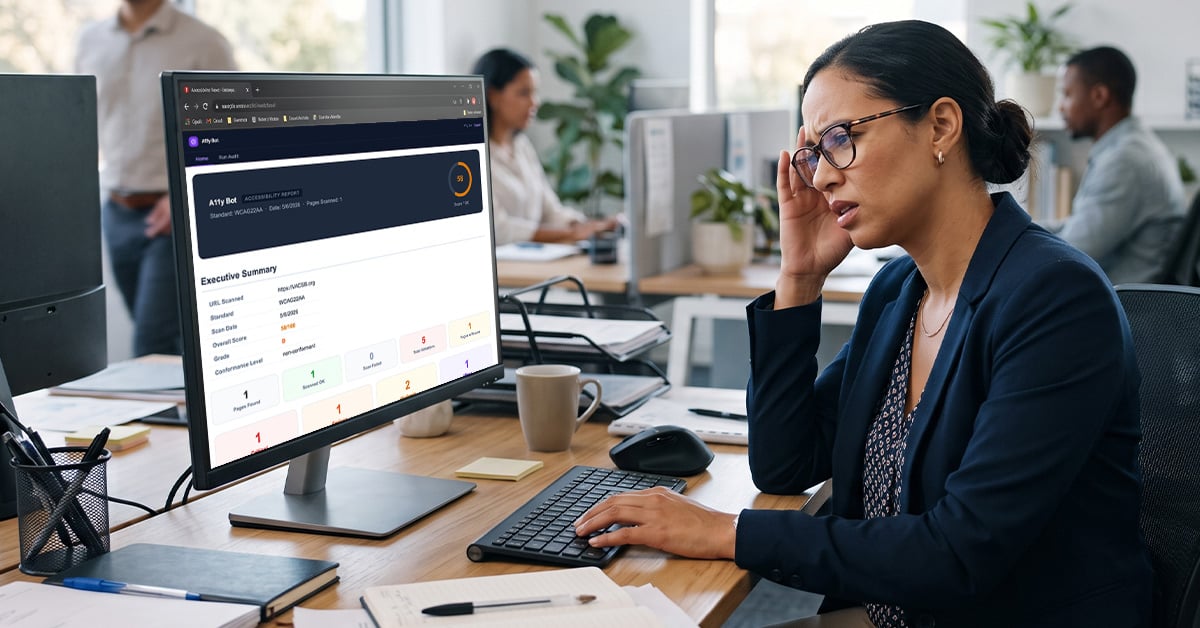
For a more thorough audit, our A11y Bot runs over 100 WCAG rules against every page, with support for WCAG 2.0, 2.1, and 2.2 (AA), EN 301 549, Section 508, and Trusted Tester v5. Every violation is grouped by rule, mapped to its impact area (vision, cognitive, motor, or hearing), and paired with a direct link to the relevant WCAG criteria along with guidance on how to fix it.
Once you have a list of issues, the fixes that affect the most users and the most pages should come first.
After making changes, test again. Automated tools catch many issues, but manual testing may reveal problems that automated scans miss. Tab through your site without using a mouse and check whether every interactive element is reachable and clearly identified.
Websites change constantly, so new pages, updated content, redesigned sections, and added features can all introduce new accessibility problems. Treating accessibility as an ongoing part of website maintenance rather than a single checklist keeps your site usable and compliant over time.
Scheduled, regular monitoring can catch errors early, and the A11y Bot lets you set up weekly or monthly automated audits for any URL. It runs the scans on schedule, emails you the results, and maintains a full history so you can track your accessibility score over time.
If a site update introduces a regression, you will know about it without having to remember to check. For agencies or businesses managing multiple websites, this kind of per-domain monitoring prevents issues from going unnoticed across a portfolio of sites.
Pairing scheduled audits with manual testing gives you the most complete picture. Automated tools catch structural and code-level problems efficiently, while manual testing reveals usability issues that no scanner can detect on its own.
If your website has never been tested for accessibility, there is a strong chance it has issues that are affecting users and search performance right now. Advanté-BCS works with businesses to audit, improve, and maintain websites that meet accessibility standards and perform well in search.
A11y Bot provides automated WCAG audits with scheduled monitoring, PDF reports, VPAT generation, and AI-assisted remediation, with features scaling by plan and no per-seat fees, all at a transparent per-domain price. As a marketing agency in Richmond, VA, our team helps ensure your site reaches the widest possible audience without leaving compliance or usability to chance.
Request a quote online or contact us by calling (804) 788-0048 to get started.
1 min read
The way people find local businesses has changed significantly over the past few years, and artificial intelligence (AI) is now a central part of...
1 min read
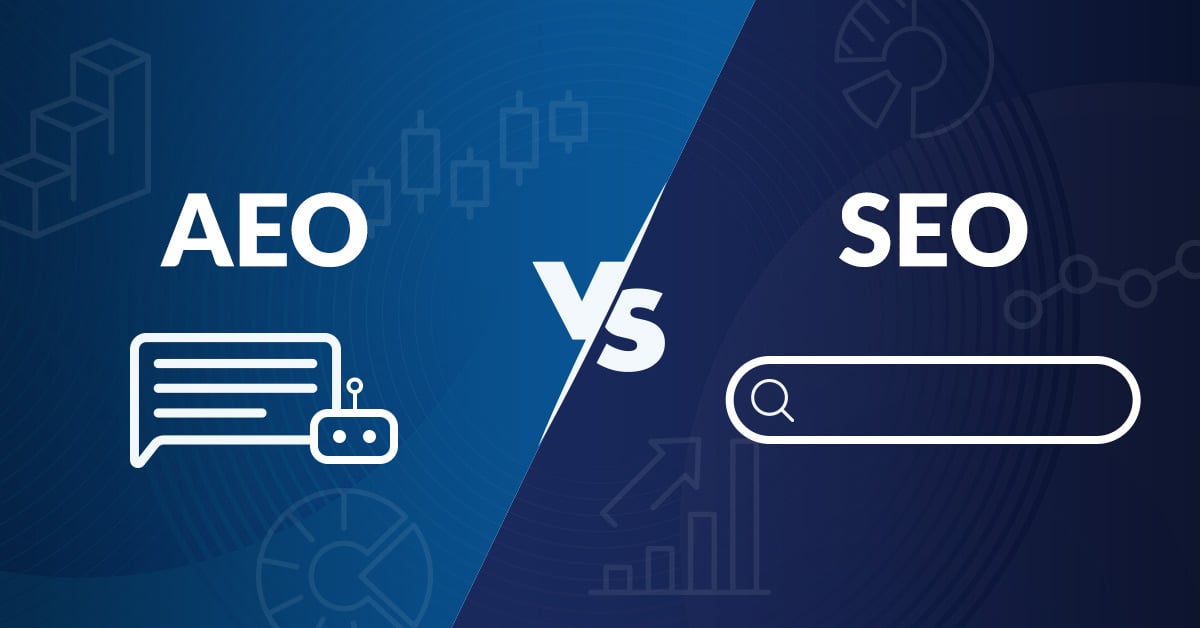
The way people search for information online continues to change, especially as generative AI reshapes search engines. Traditional search engine...
1 min read
When businesses ask how long it takes to rank on Google, the truth is it depends. The timeline for being found online varies based on the approach...