Skip to the main content.
Digital Marketing Services

   Web Services

    Website Design
    Web Hosting
    Website Refresh™
    Search Engine Optimization

   Paid Advertising

    Google Ads Management
    Meta Ads Management


   Service Bundles

    For Small Companies
    For Growing Companies
    For Established Companies

Agency Services

builds brand awareness icon Branding
multi-platform advertising icon Media Buying
graphic design icon Graphic Design
copywriting icon Copywriting
Builds trust with your audience icon Public Relations


5 min read

How Internal Linking Affects Your Search Rankings

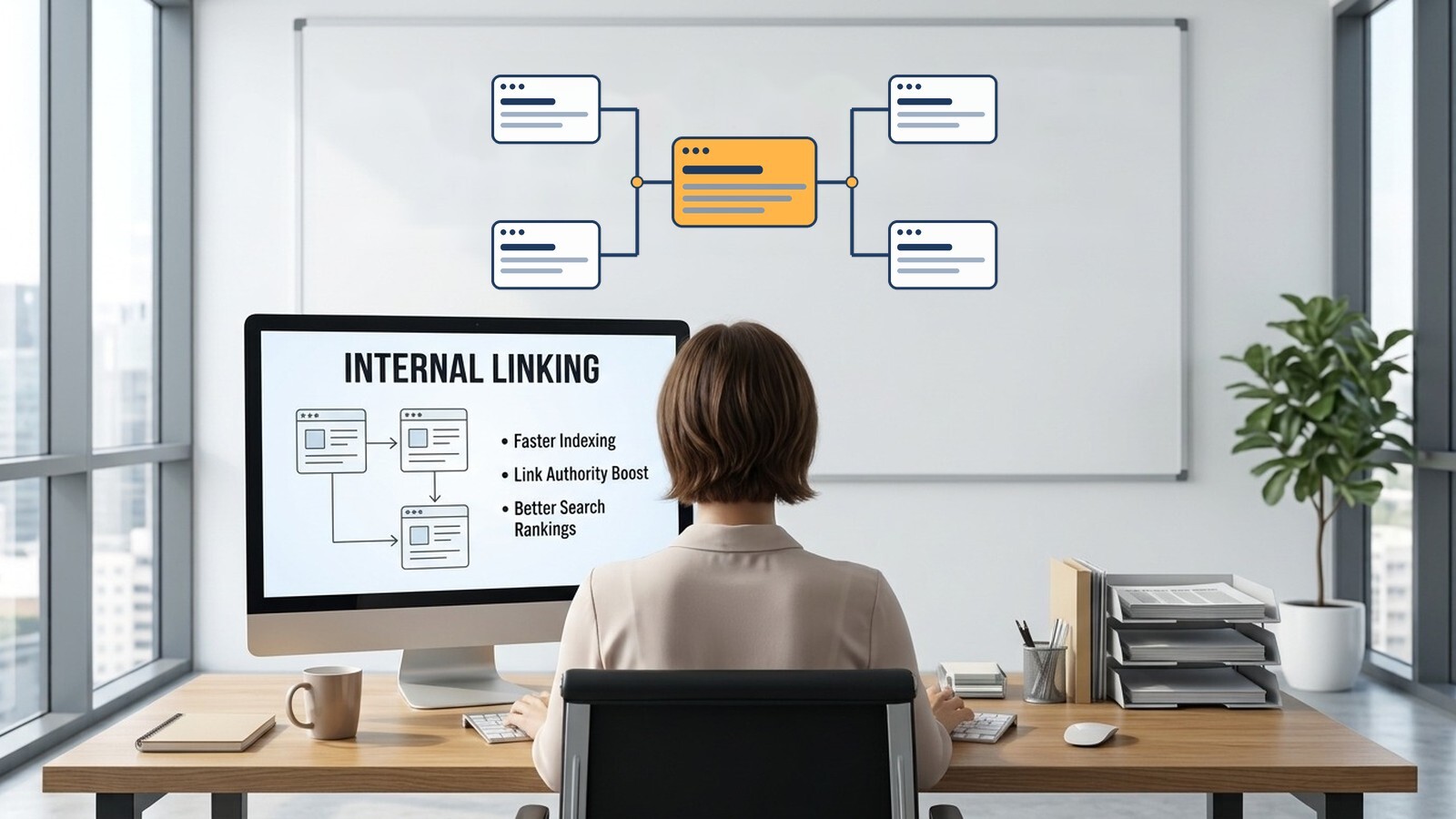
Woman at a computer reviewing an internal linking diagram that connects a main page to related web pages
How Internal Linking Affects Your Search Rankings
8:47

Most businesses put time and effort into creating new content, building backlinks, and improving page speed. Many overlook one of the simplest factors behind search rankings: how their own pages link to each other. A weak internal linking structure can leave important pages buried, where neither users nor search engines can easily find them.

The good news is that you can fix internal linking at any time without waiting for backlinks or domain authority to build, and without advanced technical skills. All you need is a clear picture of how your pages relate to each other and a deliberate plan for connecting them.

What Is Internal Linking?

Internal linking is the practice of connecting one page on your website to another, and each link does two jobs at once. It gives users a clear path to related content so they can find what they need faster, and it tells search engines that the linked page is relevant and worth crawling.

Search engines follow internal links to discover new pages and to understand how the pages on your site fit together. When a page receives links from many other relevant pages, search engines interpret it as important within your site’s hierarchy. A page with no internal links pointing to it is an orphan page, and unless it appears in your sitemap or earns external backlinks, crawlers have little chance of finding it.

Internal links also pass link equity (sometimes called link authority), which means that when a strong page on your site links to a weaker one, some of its authority carries over. For example, if your most-visited guide links to a new service page, that page is likely to be crawled sooner and rank faster than it would on its own. As a result, your internal linking structure has a direct influence on which of your pages rank.

Why Most Small Business Websites Get This Wrong

Small business websites tend to have minimal internal linking for a few common reasons. Pages are often created in isolation, with each service page, blog post, or landing page treated as a standalone piece rather than as part of a connected structure such as a topic cluster, where related pages link to and from a central pillar page. New content also gets published without anyone going back to link to it from existing pages, and older content is rarely updated to reference what came after it.

The result is a site where most pages can only be reached through the main navigation or a blog archive. Search engines can still crawl these pages, but without supporting internal links, crawlers get no signal about which pages matter most or how topics relate to each other across the site.

The problem is common with blog content, where a business might publish dozens of posts over time without linking them to each other or to relevant service pages, and much of their search value is lost as a result. Connecting related posts is also one of the simplest ways to drive more traffic to your blog, since readers who land on one post then have a clear path to the next.

How Internal Links Can Improve Crawling and Indexing

Internal links give search engine crawlers clear pathways between pages, and when your pages are well connected, crawlers can move through your site logically and discover new or updated content faster. On large websites, this also helps search engines make the most of their crawl budget, which is the number of pages they will crawl in a given period. Crawl budget is rarely a limiting factor for small business websites, but clear pathways still help new pages get found sooner.

Pages buried several clicks deep from the homepage, or that lack internal links entirely, may take longer to get indexed and, in some cases, may not get indexed at all. For businesses that regularly publish new content or add service pages, a strong internal linking structure helps make sure those pages are found and evaluated quickly.

Internal links also help search engines understand how topics relate across your site. When several blog posts on related subjects link to a central service page, search engines recognize that page as a key resource for the topic, and over time this kind of topic cluster becomes one of the most effective ways to build topical authority.

What a Strong Internal Linking Strategy Looks Like

There’s no single formula for internal linking, but certain practices consistently produce better results. The goal is to connect content in a way that is useful for visitors and logical for search engines without forcing links where they do not belong.

  • Link from blog posts to related service pages when the content naturally supports it, so users and crawlers can move from informational content to conversion-focused pages.
  • Connect blog posts when they cover related topics, which reinforces topical authority and keeps users engaged longer.
  • Use descriptive anchor text that tells both users and search engines what the linked page is about, rather than generic phrases like “click here” or “learn more.”
  • Review older content periodically and add links to newer pages that did not exist when the original content was published.
  • Keep every important page within two to three clicks of the homepage, so neither visitors nor crawlers have to dig to find it.

The anchor text you use matters more than many people realize, because search engines treat it as a signal of what the linked page is about. Linking to your SEO services page with the text "search engine optimization" is far more useful than linking to it with the word "here." Consistent, descriptive anchor text across your site strengthens the relevance signals for the pages you want to rank. Descriptive link text also matters for screen reader users, and vague links are one of the common reasons websites fail accessibility tests.

Common Internal Linking Mistakes to Avoid

Even when businesses start paying attention to internal linking, a few mistakes tend to come up again and again. They are easy to fix once you spot them, but if left unchecked, they can quietly undermine the rest of your efforts.

  • Using the same anchor text for different pages, which sends search engines conflicting signals about which page is most relevant for that term.
  • Overloading a single page with dozens of internal links, which dilutes the value of each link and creates a cluttered experience for readers.
  • Relying only on header and footer navigation, which provides structural links but misses the contextual relevance that links within your content provide.
  • Linking to pages that return errors or have been removed, which creates dead ends for both users and search engine crawlers.

Running a periodic site audit to check for broken internal links, orphan pages, and vague anchor text helps keep your linking structure healthy over time. Most SEO auditing tools flag these issues automatically, so checking for them can easily become a routine part of website maintenance, and it is worth pairing that review with an accessibility audit, since vague link text and broken links create problems for screen reader users as well.

Internal Linking as Part of a Larger Search Strategy

Internal linking is one component of a broader search engine marketing strategy that also includes content quality, technical health, and external authority signals. A clear topical structure also supports answer engine optimization (AEO), since it can help your content appear in featured snippets and AI-generated answers.

Unlike backlinks, internal linking is fully within your control, which means you can start improving it today. The benefits also compound over time: every new page you publish becomes an opportunity to strengthen existing pages, and every existing page becomes a potential source of authority for new content. For businesses investing in search engine optimization in Richmond, Virginia, internal linking is the kind of foundational work that turns a collection of pages into a structure search engines can understand and reward.

Start Building a Stronger Search Foundation

If your website has gaps in its internal linking structure, your existing content likely holds ranking potential you haven’t tapped yet. As a digital marketing agency in Richmond, VA, Advanté-BCS helps businesses go beyond content creation with the technical and structural SEO work that drives long-term performance, whether that means a full strategy or targeted improvements to your existing site.

Request a quote online or call us at (804) 788-0048 to get started.

How AI Is Changing the Way Customers Find Local Businesses

How AI Is Changing the Way Customers Find Local Businesses

AI is reshaping how customers search for and choose local businesses. Learn what this means for your visibility and how to stay ahead of the shift.

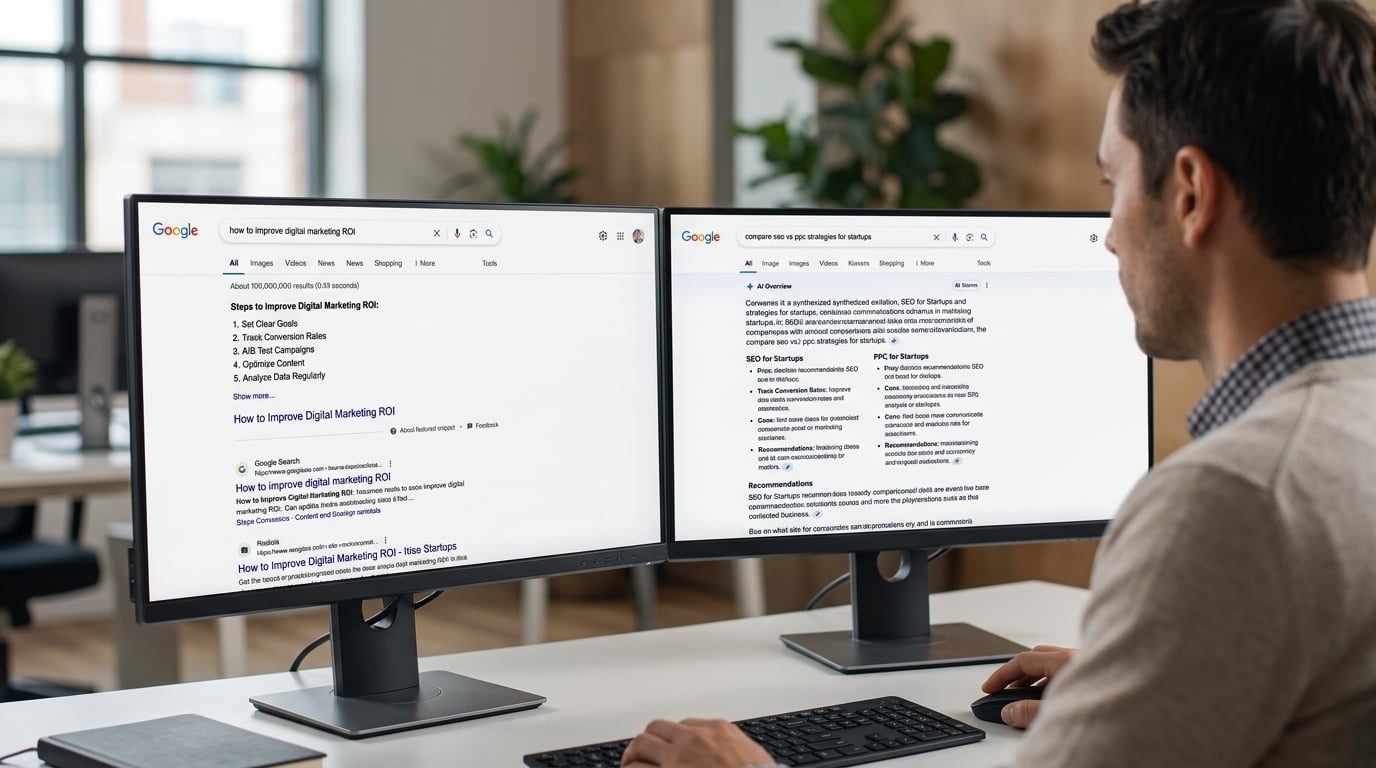
Featured Snippets vs. AI Overviews

Featured Snippets vs. AI Overviews

Learn how featured snippets and AI Overviews differ, how each affects your search visibility, and what Richmond businesses should prioritize in their...
AEO vs SEO: Is AI Changing Your Search Strategy?

AEO vs SEO: Is AI Changing Your Search Strategy?

Traditional SEO isn't dead, but AEO is changing the game. Learn the key differences between search and answer engine optimization to keep your...